Scoliosis in Children: A Parent’s Complete Guide to Spinal Curvature
Understanding Your Child’s Diagnosis
Have you noticed that your child’s shoulders appear uneven, or their clothing fits asymmetrically? Perhaps one side of their chest seems more prominent than the other. These signs might indicate scoliosis—a condition that affects thousands of children every year.
As a Spinal Orthopaedic Surgeon trained at AIIMS, New Delhi, I understand the concern parents feel when hearing this diagnosis. However, understanding scoliosis can transform your worry into informed action. Let me explain everything you need to know.
What Is Scoliosis?
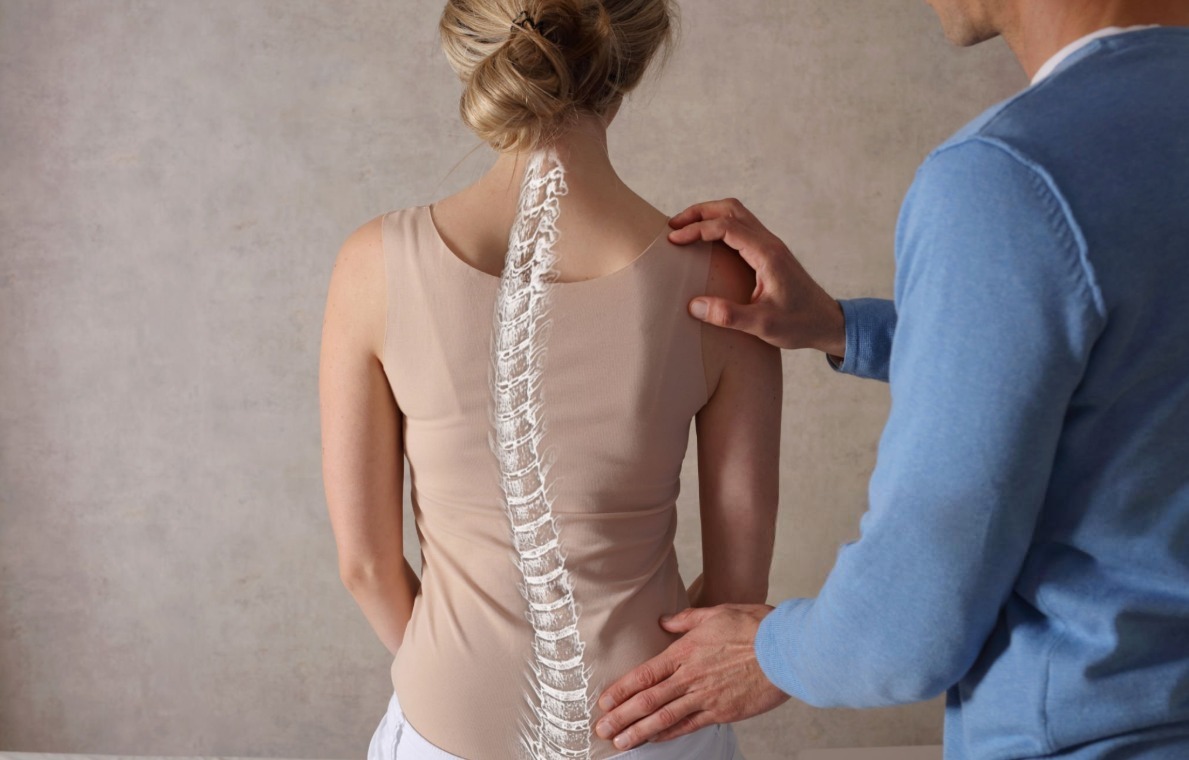
Scoliosis is an abnormal sideways curvature of the spine. When viewed from behind, a healthy spine should appear straight. In scoliosis, the spine curves into a C-shape or S-shape pattern instead.
Doctors diagnose scoliosis using the Cobb angle—a precise measurement taken from X-rays. Curves measuring less than 10 degrees are considered normal variation. Any curvature of 10 degrees or more is officially classified as scoliosis requiring monitoring.
When Does Scoliosis Develop?
Scoliosis most commonly appears during puberty and teenage years (ages 10-15), coinciding with rapid growth spurts. This timing is critical because the condition can progress quickly during these developmental years.
Important: Girls are significantly more likely to develop progressive scoliosis requiring treatment compared to boys—approximately 8 times more likely.
Why Does Scoliosis Happen?
There are three main types of scoliosis:
- Idiopathic Scoliosis (80-85% of cases): The cause is unknown. This is NOT caused by poor posture, heavy backpacks, or anything parents did wrong. It appears to have genetic components but no specific preventable cause.
- Congenital Scoliosis: Present from birth due to abnormal spinal development in the womb.
- Neuromuscular Scoliosis: Caused by conditions affecting nerves and muscles, such as cerebral palsy or muscular dystrophy.
How to Screen Your Child at Home
Early detection is crucial. Here’s a simple three-point check you can perform:
Preparation: Have your child stand with their back to you, shirt removed, in good lighting.
Check 1 – Shoulders: Are they level, or is one noticeably higher?
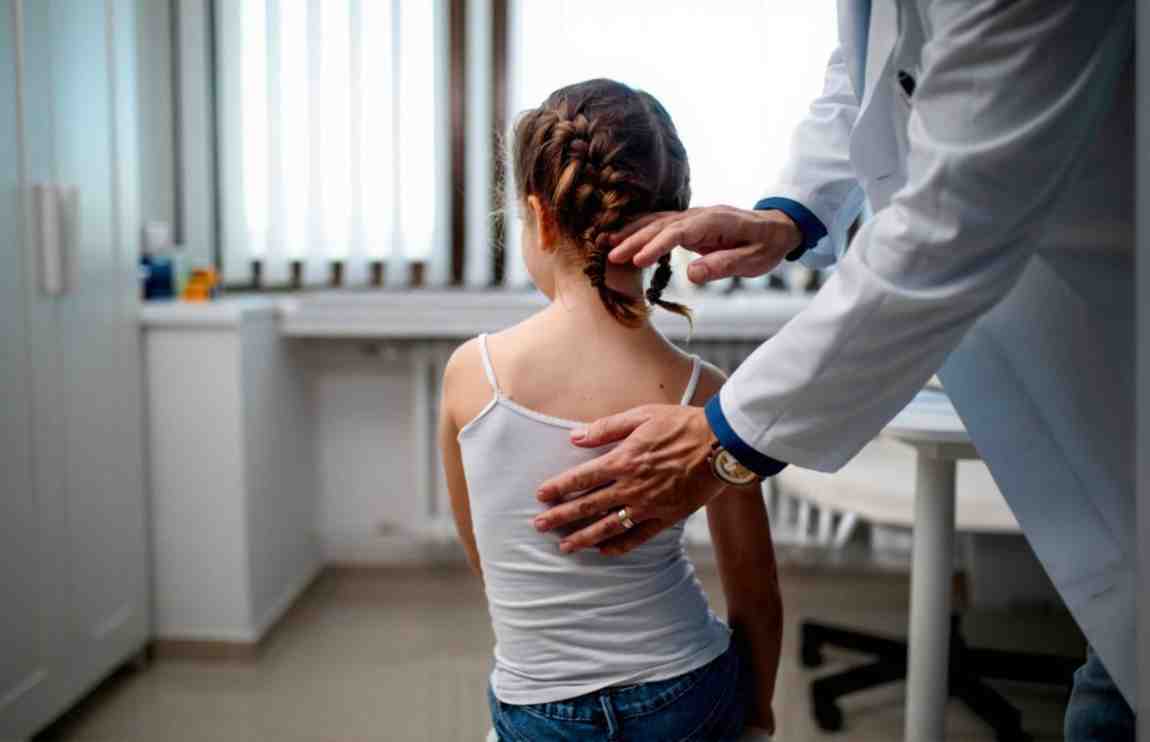
Check 2 – Rib Cage: Does one side protrude while the other appears hollow? Ask your child to bend forward—if scoliosis is present, you’ll see a “rib hump” where one side rises higher.
Check 3 – Waistline: Is the space between arms and body equal on both sides, or does one side show more space?
If you notice ANY of these signs, schedule an appointment with a spine specialist immediately.
Is Scoliosis Dangerous?
Here’s the reassuring truth: Most cases of scoliosis are not medically dangerous. The majority of children with scoliosis lead completely normal, active lives without significant limitations.
However, severe untreated scoliosis (curves exceeding 60-70 degrees) can cause serious complications including:
- Reduced lung capacityand breathing difficulties
- Heart strainfrom chest deformity
- Increased infection susceptibility
- Chronic pain and visible deformity
The key message: These complications are preventable with proper monitoring and timely intervention.
Understanding Your Child’s Curve: What the Numbers Mean
Less Than 20 Degrees: Observation Only
- Action: Regular check-ups every 6-12 months
- Treatment: None required, just monitoring
- Prognosis: Excellent—most curves remain stable
20-40 Degrees: Active Conservative Management
- Action: Bracing (16-23 hours daily) and physical therapy
- Treatment: Custom spinal orthoses, Schroth method exercises
- Prognosis: Good—bracing prevents progression in 70-75% of cases when worn consistently
- Important: Surgery is NOT required at this stage
40-50 Degrees: Surgical Consideration
- Action: Close monitoring, surgical consultation
- Concern: High risk of continued progression, especially during growth
- Decision factors: Remaining growth potential, progression rate, curve location
60+ Degrees: High Alert
- Action: Surgical intervention strongly recommended
- Risk: Cardiopulmonary complications become significant
- Outcome: Modern spinal fusion corrects 50-70% of curvature and prevents further progression.
Scoliosis Treatment
Scoliosis Treatment Options Explained
Scoliosis Non-Surgical Approaches
Bracing: Most effective for growing children with curves between 20-40 degrees. Braces apply corrective forces to prevent curve progression. They don’t permanently correct the curve but stop it from worsening.
Physical Therapy: Specialized exercises (Schroth method, SEAS) strengthen supporting muscles, improve posture, and may slow progression in mild cases.
Observation: For curves under 20 degrees, regular monitoring ensures early detection of any progression.
Scoliosis Surgical Treatment
Surgery is typically recommended when:
- Curves exceed 45-50 degrees in growing children
- Conservative treatment has failed
- Cardiopulmonary function is compromised
Modern spinal fusion involves using rods, screws, and bone graft to correct and stabilize the spine. Recovery takes 6-12 months, with most patients returning to normal activities including sports.
Living with Scoliosis: Practical Guidance
Your child CAN:
- Participate in most sports (swimming is especially beneficial)
- Exercise regularly
- Lead a completely normal social life
Emotional support is crucial: Adolescence is challenging without added medical concerns. Create open communication, connect with support groups, and consider counseling if body image issues arise.
Warning Signs Requiring Immediate Attention
Seek emergency care if your child experiences:
- Sudden severe back pain
- Numbness or weakness in legs
- Bowel or bladder control problems
- Severe breathing difficulty
The Bottom Line
Scoliosis is highly manageable with modern medical care. Your child’s outcome depends on five key factors:
- Early detection
- Accurate diagnosis
- Appropriate treatment
- Consistent monitoring
- Treatment compliance
As a parent, you play the most critical role. Your vigilance in noticing changes and supporting treatment adherence is irreplaceable.
Remember: Most children with scoliosis grow up to lead completely normal, active, fulfilling lives. Armed with this knowledge, you’re now equipped to be your child’s best advocate.
Dr. Dhruv Sharma
Spinal Orthopaedic Surgeon
Fellowship Training: AIIMS, New Delhi
Specializing in Pediatric and Adult Spinal Disorders
Disclaimer: This article is for educational purposes only. Always consult a qualified spine specialist for diagnosis and treatment specific to your child’s condition.