
Did Your Knee Twist One Day and Never Feel the Same Again? It Could Be an ACL Injury
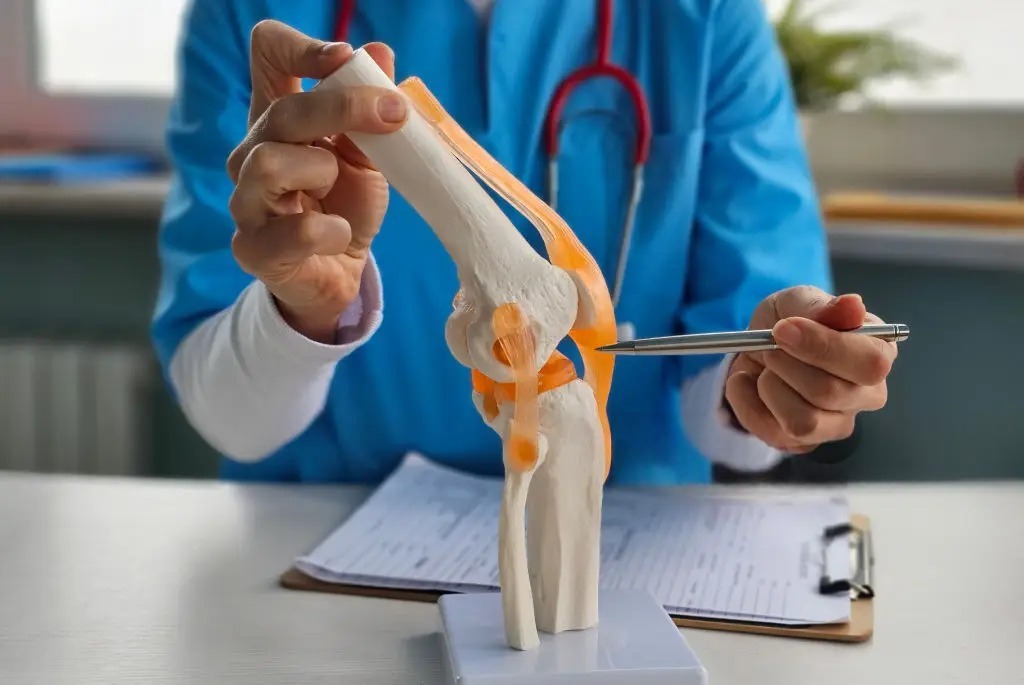
Have you ever been playing your favorite sport—running confidently, cutting sharply, and moving freely—when suddenly your foot stayed planted, your knee twisted, and everything changed in a moment?
At first, the pain may have seemed manageable. You might have even ignored it.
But the next time you stepped onto the field, something felt off.
Your knee didn’t feel as strong.
Your movements weren’t as smooth.
Your confidence was shaken.
If this experience sounds familiar, you could be dealing with an ACL injury.
ACL tears are common, especially among athletes and physically active individuals. However, many people don’t fully understand what the ACL does, how injuries happen, and why early treatment is so important. Let’s break it down in simple, easy-to-understand terms.
What Is the ACL?
Understanding the Anterior Cruciate Ligament (ACL)
ACL stands for Anterior Cruciate Ligament. It is one of the strongest and most important ligaments inside your knee joint.
It connects:
- The femur (thigh bone)
- To the tibia (shin bone)
Think of the ACL as a powerful internal rope that stabilizes your knee, keeping the bones properly aligned and preventing abnormal movement.
Key Functions of the ACL in Knee Stability
1. Prevents Forward Movement of the Shin Bone
When you walk, run, jump, or change direction, the ACL prevents your tibia from sliding too far forward in relation to your femur. This control gives your knee a firm, stable, and secure feeling.
2. Controls Twisting and Rotational Movements
The ACL plays a crucial role during movements such as:
- Sudden stops while running
- Quick direction changes
- Jumping and landing
- Sharp pivots and turns
That’s why ACL injuries are particularly common in sports like:
- Football (Soccer)
- Basketball
- Kabaddi
- Rugby
- Badminton
- Cricket
- Volleyball
Any sport that involves cutting, pivoting, or sudden deceleration puts tremendous stress on the ACL.
How Do You Know If You’ve Injured Your ACL?
There are three classic signs that strongly suggest an ACL tear.
1. A Sudden “Pop” Sound or Sensation
Many patients describe hearing or feeling a distinct “pop” inside the knee at the time of injury. This moment is often very memorable.
2. Rapid Knee Swelling
Swelling usually develops within:
- 2–3 hours, or
- Up to 24 hours
If X-rays show no bone fracture, but swelling is significant, the injury is likely related to ligament or soft tissue damage, with ACL tear being one of the most common causes.
3. Knee Instability – The Most Important Symptom
After a few weeks, swelling and pain reduce, but instability appears.
What does instability feel like?
Before injury:
- Knee felt strong
- Solid
- Fully under control
After injury:
- Knee feels loose
- Shaky
- Unreliable
- As if it might suddenly “give way”
You may notice:
- Difficulty running
- Reduced sports performance
- Fear while pivoting
- Extra effort needed for simple movements
- Avoidance of sports due to lack of confidence
This giving-way sensation is the hallmark sign of an ACL injury and should never be ignored.
Why Does an ACL Injury Happen?
Most ACL Injuries Are Non-Contact
Surprisingly, most ACL tears happen without any direct hit or collision.
They commonly occur when:
- Your foot is firmly planted
- Your body twists suddenly
- You stop abruptly while running
- You land awkwardly from a jump
In these moments:
- The tibia slides forward
- The knee rotates
- The ACL becomes overstretched or torn
This explains why ACL injuries are extremely common in athletes and physically active individuals.
Less Common Cause: Direct Trauma
Although less frequent, ACL injuries may also result from:
- Road traffic accidents
- Bike or car crashes
- Sudden dashboard injuries
- Direct forceful impact to the knee
Why You Should Not Ignore ACL Injury Symptoms
Many people believe that once swelling and pain reduce, their knee has healed. Unfortunately, this is a dangerous misconception.
An untreated ACL tear can lead to:
- Repeated episodes of knee giving way
- Meniscus tears
- Cartilage damage
- Early-onset knee arthritis
- Long-term joint degeneration
Early diagnosis and proper treatment can protect your knee health and prevent permanent damage.
When Should You Consult an Orthopedic Specialist?
You should seek medical evaluation if you experience:
- A popping sound during injury
- Rapid knee swelling
- Persistent knee instability
- Fear while running or playing sports
- Reduced athletic performance
Early orthopedic consultation allows:
- Accurate diagnosis
- Timely MRI evaluation
- Personalized treatment planning
- Faster and safer recovery
Treatment Options for ACL Injury
Non-Surgical Treatment
Suitable for:
- Low-demand individuals
- Elderly patients
- People with minimal instability
Includes:
- Physiotherapy
- Strength training
- Bracing
- Activity modification
Surgical Treatment (ACL Reconstruction Surgery)
Recommended for:
- Athletes
- Young active individuals
- Patients with persistent instability
Modern arthroscopic ACL surgery offers:
- Minimally invasive treatment
- Faster recovery
- High success rates
- Reliable return to sports
Final Thoughts: Listen to What Your Knee Is Telling You
Your knees are built to handle powerful movements—running, jumping, twisting, and pivoting. When your ACL is injured, that natural confidence and control disappear.
If your knee doesn’t feel the way it used to, don’t ignore it.
Instability is not just weakness.
It is often your ACL signaling that something is wrong.
Take care of your knees today — so they can support you for a lifetime.