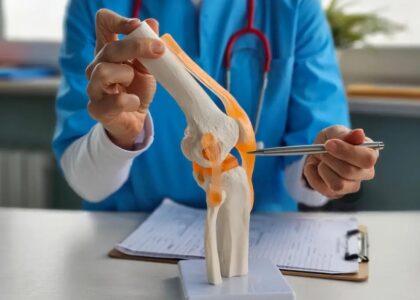

Can an ACL Tear Heal Without Surgery? A Complete Guide to ACL Tear Grades and Treatment
By Dr. Dhruv Sharma | Spine & Orthopedic Surgeon, AIIMS Trained | Narayan Spine and Joint Institute
The Confusion Every ACL Patient Faces:
You twisted your knee. The MRI report comes back confirming an ACL tear. One orthopaedic surgeon tells you surgery is the only option. Another says you can manage without it. You go home confused, anxious, and lying awake at 2 AM hoping someone will tell you that you don’t need to go under the knife.
If this sounds familiar, you are not alone. ACL tears are one of the most common and most misunderstood knee injuries in both athletes and active adults. The good news is that the answer to whether you need surgery is not as complicated as it seems — once you understand the grading system.
What Is the ACL and Why Does It Matter?
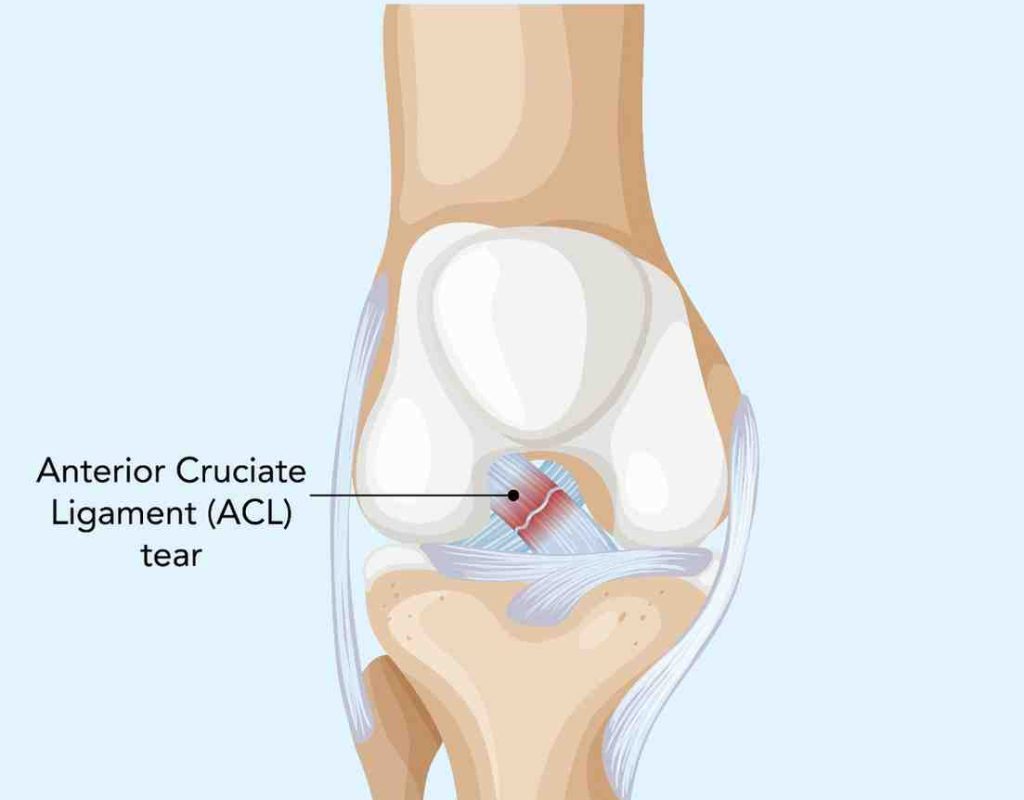
The Anterior Cruciate Ligament, commonly known as the ACL, is a strong band of fibrous tissue that connects the femur (thigh bone) to the tibia (shin bone) inside the knee joint. Its primary job is to provide rotational stability and prevent the tibia from sliding forward relative to the femur.
When this ligament gets stretched or torn — usually during a sudden twist, pivot, or direct impact — the result is an ACL injury. Depending on the severity, your symptoms and treatment path will vary significantly.
Understanding ACL Tear Grades: The Key to Your Treatment Decision
The single most important step after receiving your MRI report is identifying your grade of ACL tear. Most MRI reports will clearly mention this. There are three recognised grades of ACL tears, and your grade is the starting point for all treatment decisions.
Grade 1 ACL Tear — Sprain, Not a Tear:
A Grade 1 ACL injury is technically a sprain, not a true tear. In this condition, the ligament fibres are stretched beyond their normal limit but no fibres are actually torn or ruptured.
Symptoms: Mild pain, some swelling, but the knee feels relatively stable.
Treatment: A Grade 1 ACL injury does not require surgery. With 3 to 4 weeks of relative rest, the body’s natural healing process restores the ligament to its normal length and function. To accelerate recovery, orthobiologic therapies such as PRP (Platelet-Rich Plasma) therapy or stem cell therapy can be considered. These regenerative treatments support tissue healing and can significantly shorten recovery time.
Bottom line: No surgery needed.
Grade 3 ACL Tear — Complete Rupture
A Grade 3 ACL tear means the ligament is more than 50% torn or has ruptured completely. This is the most severe form of ACL injury, and the functional consequences are hard to ignore.
Symptoms of a Grade 3 ACL Tear include:
- A persistent feeling of looseness or instability in the knee
- The sensation that the knee might give way while walking, running, or climbing stairs
- Inability to make quick directional changes during physical activity
- Constant mental effort required to protect the knee with every step
- Significant impact on day-to-day activities and sports performance
When the ACL is completely torn, there is no natural healing pathway. The structural integrity of the knee joint is compromised, and in most cases, ACL reconstruction surgery is recommended and necessary to restore full function — especially for physically active individuals and those who wish to return to sports.
Bottom line: Surgery is typically required.
Grade 2 ACL Tear — The Decision That Depends on You
Grade 2 tears are the most complex and often the most confusing category. In a Grade 2 tear, approximately 50% of the ACL fibres are torn. This is where blanket recommendations break down, and personalised assessment becomes critical.
Here is the key insight that many patients are not told: your MRI grade alone does not determine whether you need surgery for a Grade 2 ACL tear.
Instead, the deciding factor is your functional limitation — meaning, how your knee actually behaves in daily life.
When Surgery May NOT Be Needed In ACL Tear?
Some patients with Grade 2 ACL tears experience little to no instability in the knee. They can walk, climb stairs, and even exercise with a solid, stable feeling in the joint. For these patients, surgery is not necessary.
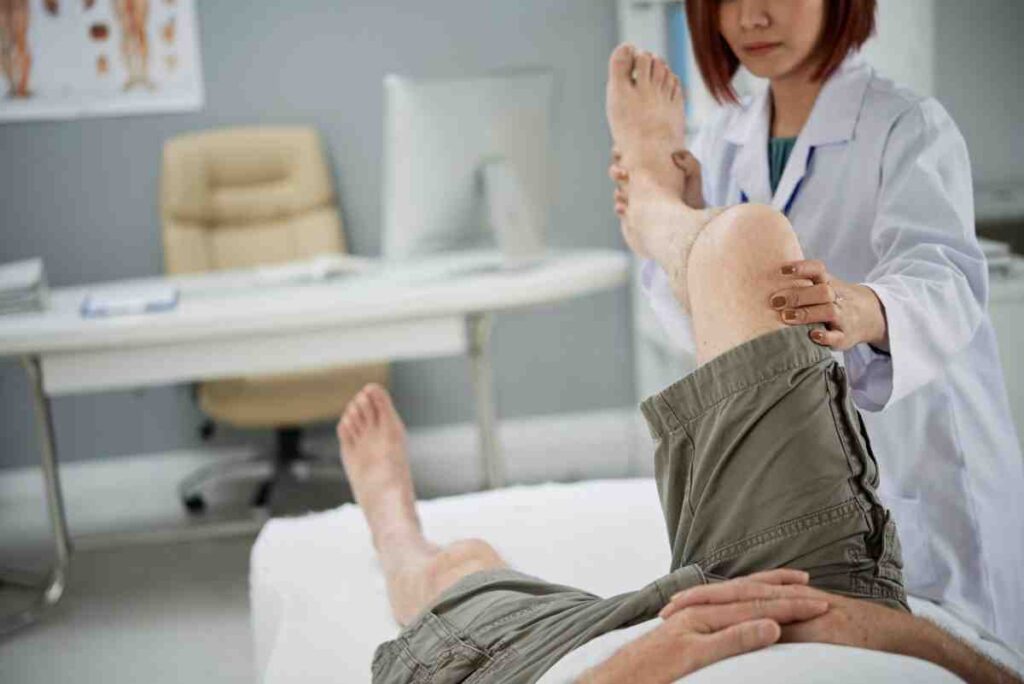
The reason some patients cope well is due to the body’s compensatory mechanisms. Muscles surrounding the knee — particularly the quadriceps, hamstrings, gluteus muscles, and calf muscles — can take over some of the stabilising role that the partially torn ACL once played. Through targeted physiotherapy and strength training, many Grade 2 patients achieve excellent functional recovery without ever needing surgery.
When Surgery IS Needed In ACL Tear?
However, if a patient with a Grade 2 ACL tear continues to experience knee instability — that feeling of looseness, giving way, or lack of confidence in the joint — it means the surrounding muscles have not compensated adequately. In these cases, surgery becomes necessary.
The deciding framework for Grade 2 ACL tears:
| Factor | Surgery NOT Needed | Surgery Likely Needed |
|---|---|---|
| Knee stability | Stable, solid feeling | Loose, giving way |
| Daily activities | Unaffected | Hampered |
| MRI grade | Grade 2 (partial tear) | Grade 2 (partial tear) |
| Muscle compensation | Adequate | Insufficient |
Does Age Determine Whether You Need ACL Surgery or Not?
A common misconception is that younger patients always need surgery and older patients can avoid it — or vice versa. This is not accurate.
Age is not the deciding factor in ACL tear treatment. A young, active person with a Grade 2 tear who has excellent muscle compensation and no functional instability may not need surgery at all. Conversely, a 40-year-old with a Grade 2 tear who experiences persistent instability may require surgical intervention.
What matters is not how old you are, but how your knee functions and whether the partial tear has healed or whether your body has found effective ways to compensate for the reduced ACL strength.
Key Takeaways: ACL Surgery Decision Guide.
Key Takeaways: ACL Surgery Decision Guide
To summarise the framework clearly:
Grade 1 ACL Tear → Rest, physiotherapy, and orthobiologics. No surgery needed.
Grade 2 ACL Tear → Depends on functional limitation. If the knee is stable and daily activities are unaffected, surgery can be avoided. If instability persists, surgery may be required.
Grade 3 ACL Tear → Surgery is recommended in most cases due to complete rupture and inability of the ligament to heal on its own.
The Role of Orthobiologics in ACL Recovery.
For patients who do not require surgery, or who wish to support healing after a partial tear, orthobiologic treatments offer a scientifically backed path to recovery. These include:
PRP Therapy (Platelet-Rich Plasma): Concentrated growth factors from your own blood are injected into the injured ligament to promote tissue repair and reduce inflammation.
Stem Cell Therapy: Regenerative cells are used to stimulate healing in damaged tissue, potentially accelerating ligament recovery in Grade 1 and mild Grade 2 tears.
These minimally invasive procedures can be powerful adjuncts to physiotherapy, helping patients return to activity faster and with greater confidence.
When to See a Specialist For ACL Tear.
If you have received an ACL tear diagnosis and are unsure about your next steps, a thorough clinical evaluation by an experienced orthopaedic surgeon is essential. Do not rely solely on an MRI report to make this decision. A proper physical examination, combined with an assessment of your symptoms and functional limitations, will give you the clearest picture of what your knee actually needs.
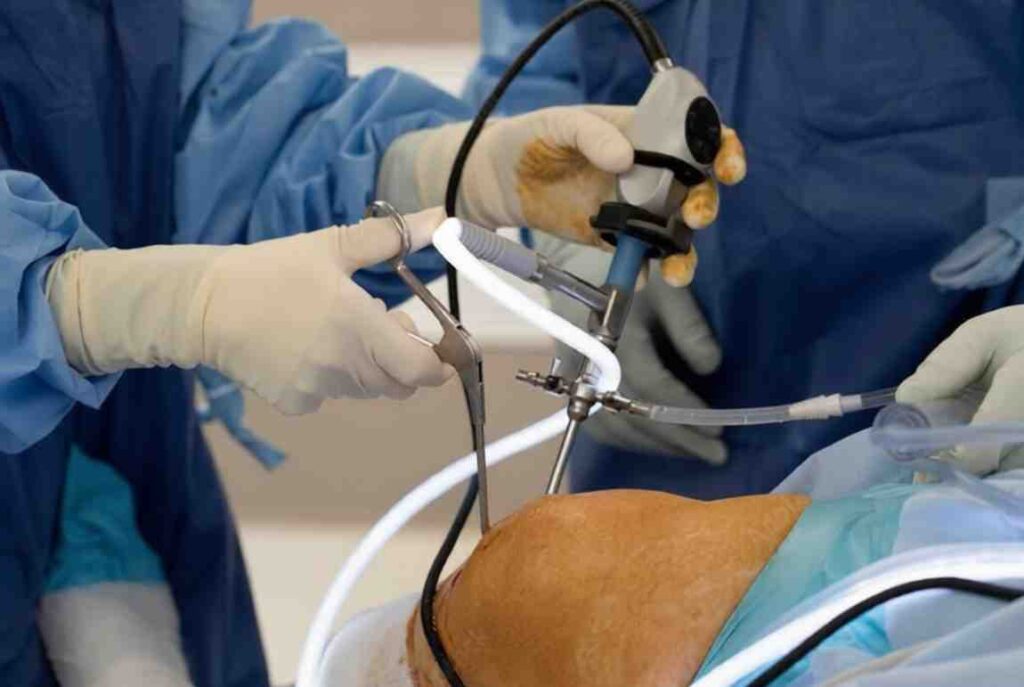
At Narayan Spine and Joint Institute, we evaluate each ACL patient individually. Our approach includes conservative management, orthobiologic therapies, and arthroscopic ACL reconstruction surgery when required — always guided by what your knee tells us, not just what your MRI shows.
Final Word:
An ACL tear does not automatically mean surgery. The grade of your tear, the way your knee functions, and the stability you experience in daily life are the true determinants of your treatment path. With the right guidance, many ACL patients avoid surgery entirely and return to full activity through targeted rehabilitation and regenerative treatments.
If you have questions about your ACL tear or are looking for a second opinion, consult a qualified orthopaedic surgeon who will assess both your imaging and your functional reality before recommending a course of action.
Dr. Dhruv Sharma is a Spine and Orthopedic Surgeon trained at AIIMS New Delhi. He specialises in minimally invasive techniques including endoscopic spine surgery, arthroscopic joint surgery, orthobiologic injections, and knee replacement at Narayan Spine and Joint Institute.