
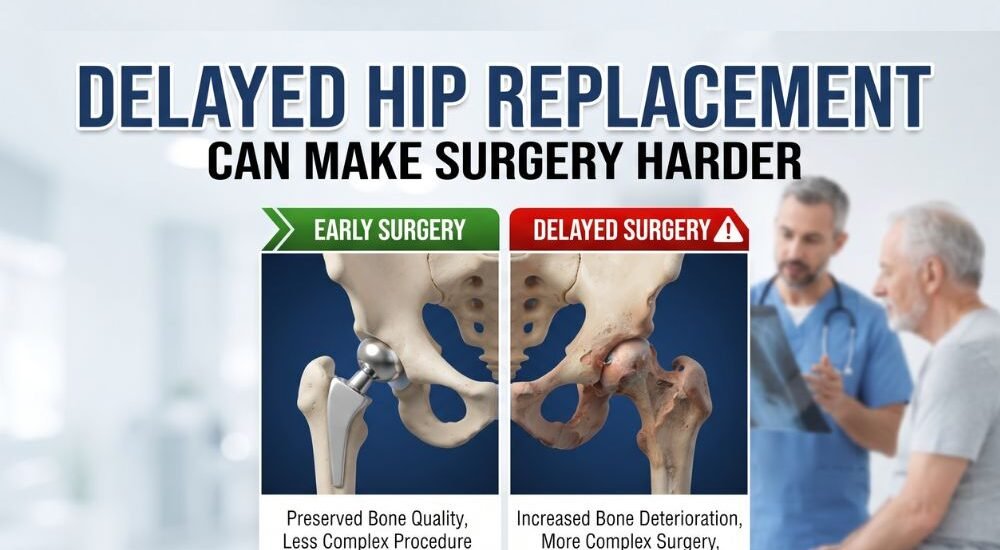
Grade 4 Hip Arthritis: Delaying Hip Replacement Can Make Surgery Harder
If you have been advised to undergo a total hip replacement for grade 4 hip arthritis, delaying surgery may do more harm than good. In advanced arthritis, the cartilage is already gone, the bones are rubbing against each other, and the joint is no longer functioning normally.
What Happens in Grade 4 Arthritis?
Grade 4 hip arthritis means the joint has reached bone-on-bone contact. This causes constant friction, pain, stiffness, and progressive damage to the hip structure. At this stage, the problem is not just pain anymore; the joint itself is becoming harder to save or manage with conservative treatment.
Some patients try to “pull it for a few more years,” but that can worsen the condition. If the hip is already severely damaged, waiting too long may make the eventual surgery more complex and the recovery more difficult.
Risks of Delaying Hip Replacement Surgery
One major problem with delay is bone and joint deformity. Over time, the acetabulum, which is the socket part of the hip, may erode, and the femoral head may move into an abnormal position. This can make the replacement surgery technically more difficult later.
Another concern is muscle weakness. When hip pain continues for a long time, patients naturally reduce movement. Weak muscles provide less support to the joint, which can affect stability, slow recovery, and increase rehabilitation time after surgery.
Long-standing arthritis can also lead to stiffness of soft tissues around the hip, including the capsule and ligaments. Once these tissues become tight, it becomes harder to regain normal movement after surgery, even with physiotherapy.
How Delay Affects Life Quality?
Advanced hip arthritis does not only affect the joint. It can affect your whole life. Many patients become dependent on others for daily activities, walk less, gain weight, and become less active overall. This can contribute to other health issues such as diabetes, blood pressure problems, and reduced fitness.
The emotional effect is also real. Chronic pain and restricted movement can lead to frustration, anxiety, or depression. It may limit work, travel, family life, and social activities. In younger patients, it may even affect intimacy and married life; in older patients, it may reduce the ability to enjoy time with grandchildren.
When Hip Replacement Helps Most?
Hip replacement is not for every stage of arthritis. In mild to moderate arthritis, especially grade 1, 2, and 3, the natural joint should usually be preserved whenever possible. But when the joint is destroyed and the cartilage is completely lost, surgery becomes the more effective option.
A properly indicated hip replacement can reduce pain, improve walking, and restore independence. It is one of the most successful surgeries in orthopedics when patient selection is appropriate.
Why Timing Matters In Hip Replacement?
The key message is simple: do not delay hip replacement when grade 4 arthritis is clearly present and surgery is genuinely indicated. Waiting too long can lead to more deformity, more stiffness, weaker muscles, tougher surgery, and a slower recovery.
At the same time, hip replacement should never be done just because of pressure or fear. A good surgeon will first decide whether the joint can still be preserved or whether replacement is truly the right step.
── Common Questions
Frequently Asked Questions
Can hip arthritis always be treated with surgery?
No. Mild to moderate arthritis is often managed without replacement. Surgery is usually reserved for advanced cases where the joint is badly damaged and symptoms are severe.
What is grade 4 hip arthritis?
It is the most advanced stage of hip arthritis, where the cartilage is mostly or completely gone and the bones are rubbing directly against each other.
Why is delaying hip replacement harmful?
Delay can lead to deformity, muscle weakness, stiffness, and more difficulty during surgery. It may also slow down recovery and affect the final outcome.
Is hip replacement a successful surgery?
Yes, when done for the right reasons and in the right patient, hip replacement is highly successful and can significantly improve pain and mobility.
Should every patient with hip pain get a replacement?
No. The decision depends on the stage of arthritis, symptoms, response to treatment, and overall joint condition. Early stages should usually be preserved.
Ready to discuss your Hip Replacement Treatment options with our team?